
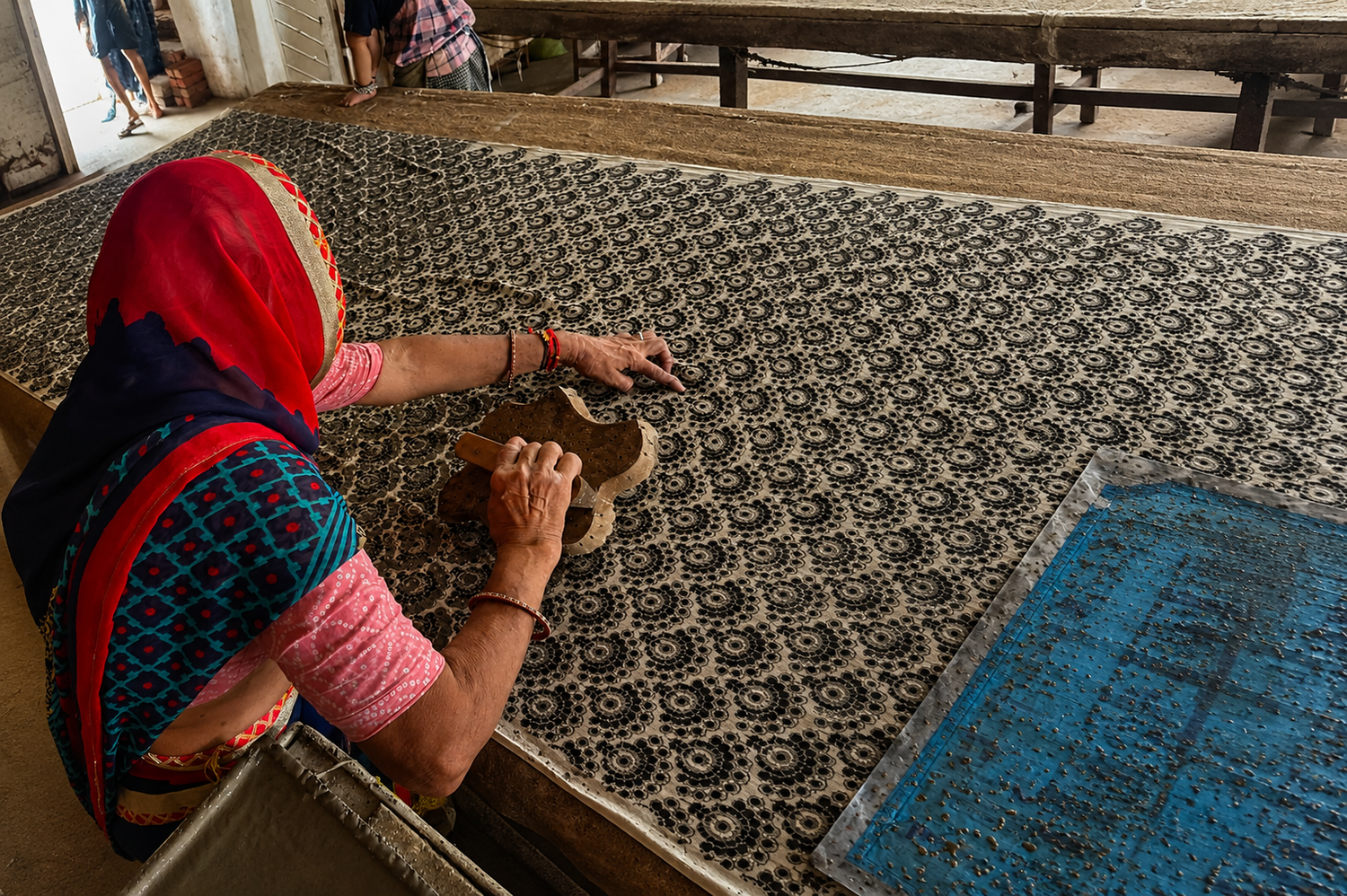
India’s textile heritage is among the oldest surviving craft traditions in the world, with evidence of cotton spinning, natural dyeing, and textile production dating back over 5,000 years to the Indus Valley Civilization. Archaeologists discovered dyed cotton fragments at Mohenjo-Daro, highlighting how deeply textiles have been connected to Indian culture and trade since ancient times.
For centuries, Indian printed and dyed fabrics were exported across Asia, Africa, the Middle East, and Europe. Historical records show that Indian cotton textiles became globally valued because of their craftsmanship, colour-fast natural dyes, and intricate handmade detailing. Long before industrial textile manufacturing existed, India had already established itself as one of the world’s leading textile centers.
Today, traditional Indian textile printing techniques continue to remain relevant because they represent authenticity, sustainability, and artisan craftsmanship in an increasingly mass-produced world. From the earthy elegance of Bagru prints to the layered complexity of Ajrakh and the narrative artistry of Kalamkari, these crafts are more than decorative techniques—they are living cultural archives preserved through generations of artisan knowledge.
Unlike machine-made fabrics, handcrafted Indian textiles celebrate imperfections, individuality, and human touch. Every carved wooden block, dye variation, and printed motif reflects the skill of the artisan behind it.
India’s Textile Heritage: An Overview
India’s textile traditions evolved through centuries of experimentation with natural dyes, weaving methods, resist printing, embroidery, and regional storytelling motifs. Different regions developed unique textile identities influenced by climate, trade routes, local resources, royal patronage, and cultural exchange.
Rajasthan became known for hand block printing traditions such as Bagru, Dabu, and Sanganeri. Gujarat developed highly intricate resist-printing and dyeing traditions including Ajrakh and Bandhani. Andhra Pradesh and Telangana became internationally recognized for Kalamkari textile art, while eastern India preserved handloom weaving and embroidery traditions.
Ancient Indian textiles were not limited to clothing alone. They were used in rituals, temple decorations, storytelling, royal courts, and home décor. Many crafts were sustained by artisan communities who passed down techniques through oral teaching and hands-on apprenticeship systems.
Even today, several artisan families continue working from traditional workshops and villages where textile printing remains deeply integrated into everyday life. According to India’s handicrafts and textile sector reports, millions of artisans across the country continue to depend on craft-based livelihoods, making textiles both a cultural and economic pillar of India’s heritage economy.
Major Traditional Printing Techniques of India
Bagru Hand Block Printing – Rajasthan

Bagru printing originates from the town of Bagru near Jaipur and has been practiced primarily by the Chhipa community for centuries. The craft is recognized for its earthy tones, natural dyes, bold motifs, and distinctly organic appearance.
The Bagru printing process involves multiple stages including fabric washing, harda treatment, natural dye preparation, block carving, hand printing, sun drying, and repeated washing. Traditionally, artisans use ingredients such as indigo, iron rust, pomegranate peel, turmeric, and madder root to prepare dyes.
Bagru motifs often include floral vines, butis, geometric layouts, jaal patterns, and nature-inspired forms. One of the defining characteristics of Bagru textiles is the slight irregularity in prints, which reflects the authenticity of handmade craftsmanship.
What makes Bagru particularly important today is its close association with sustainable textile production. The craft traditionally relies on low-energy manual processes and natural dyeing methods that create textiles with depth, softness, and character impossible to replicate through industrial printing.
Ajrakh Printing – Gujarat & Rajasthan

Ajrakh is considered one of the most technically advanced resist-printing traditions in India. Practiced mainly by the Khatri community of Gujarat and Rajasthan, the craft involves a highly detailed multi-stage process that combines resist printing, natural dyeing, washing, and precise pattern alignment.
Some authentic Ajrakh textiles go through 14–16 stages of production before completion. The process can take several weeks depending on weather conditions, dye absorption, and detailing complexity.
Ajrakh designs are known for symmetrical geometric layouts inspired by Islamic architecture, astronomy, and natural forms. Indigo blue and madder red remain the most iconic colors associated with the craft because of their deep visual richness and natural dye origins.
Historically, Ajrakh textiles were worn by pastoral communities in the Kutch region and traded across ancient routes connecting Sindh and western India. Today, Ajrakh has gained international appreciation among designers, collectors, and slow-fashion brands for its technical precision and heritage value.

Kalamkari – Andhra Pradesh & Telangana
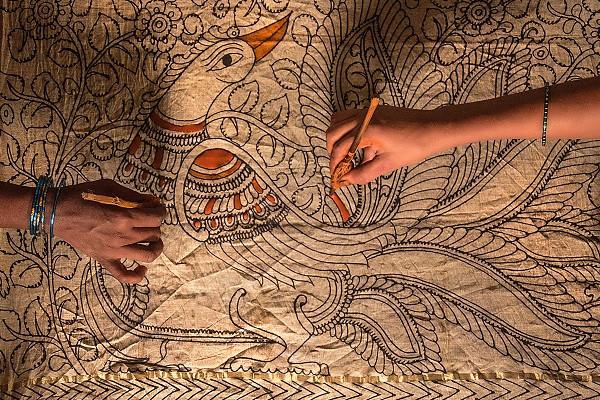
Kalamkari is a narrative textile art tradition that combines storytelling with handcrafted textile techniques. The word “Kalamkari” comes from the Persian words “kalam” meaning pen and “kari” meaning craftsmanship.
Traditionally, Kalamkari artists used bamboo pens and natural dyes to create elaborate mythological scenes inspired by the Ramayana, Mahabharata, temple art, and nature. Certain forms of Kalamkari also involve hand block printing combined with freehand detailing.
The preparation process itself is highly intensive. Fabrics undergo repeated washing, bleaching, milk treatment, outlining, dyeing, and detailing stages before completion. Natural materials such as jaggery, iron filings, indigo, and plant extracts are used to create earthy tones and lasting colors.
Unlike purely decorative textiles, Kalamkari fabrics often function as visual storytelling mediums that preserve religious narratives and regional artistic traditions.
Dabu Mud Resist Printing – Rajasthan

Dabu printing is a traditional mud-resist hand block printing technique mainly practiced in Rajasthan. The process involves applying a specially prepared mud paste onto fabric using wooden blocks before dyeing the textile.
The mud paste is traditionally created using clay, natural gum, lime, and wheat chaff. Once applied, the fabric is sprinkled with sawdust and dried before being immersed into dye baths, often using natural indigo.
After washing, the resisted areas reveal soft textured patterns with naturally faded aesthetics that are impossible to replicate mechanically. Because each layer requires drying and careful handling, Dabu printing is considered a slow and labor-intensive craft.
Dabu textiles are appreciated today for their understated beauty, organic textures, and environmentally conscious production methods.
Sanganeri Block Printing – Rajasthan

Sanganeri printing developed in Sanganer near Jaipur and became known for its fine floral motifs, delicate detailing, and elegant color palettes.
Historically, Sanganeri prints gained royal patronage because of their refined aesthetic and superior craftsmanship. Unlike Bagru’s bold rustic appearance, Sanganeri prints often feature intricate repetitive floral layouts, thin outlines, and softer tones.
Traditional Sanganeri artisans use finely carved wooden blocks to achieve high levels of detailing. These textiles remain widely used across fashion, home décor, bedding, and contemporary apparel because of their timeless versatility.
Today, Sanganeri printing continues to evolve through collaborations with designers and artisan-led brands that reinterpret heritage motifs for modern audiences.
Why Traditional Indian Textile Printing Still Matters Today
Traditional textile printing continues to remain relevant because it supports sustainability, artisan livelihoods, cultural preservation, and conscious fashion practices.
In contrast to industrial textile production—which often relies on synthetic chemicals, heavy water consumption, and mass manufacturing—many traditional Indian printing methods use natural dyes, handcrafted processes, and low-energy production systems.
Consumers globally are increasingly moving toward slow fashion and ethically produced products. As a result, handcrafted Indian textiles are gaining renewed appreciation for their authenticity, durability, and artistic depth.
Most importantly, these crafts preserve generations of cultural knowledge that cannot be replaced by machine production. Supporting artisan-led textiles means supporting living heritage traditions and the communities that continue to sustain them.
How Artisan-Led Fashion Brands Are Reviving These Techniques
Over the last decade, many independent fashion and lifestyle brands have played an important role in reviving traditional Indian textile crafts by working directly with artisan communities.
Brands such as Fabindia, Good Earth, Anokhi, and Raw Mango have helped introduce handcrafted Indian textiles to younger and international audiences through contemporary design language and ethical sourcing practices.
Several designers and slow-fashion labels are now integrating Bagru, Ajrakh, Kalamkari, and handloom textiles into modern silhouettes, home décor collections, and global fashion presentations.
This revival is not only increasing awareness around India’s textile heritage but is also helping sustain artisan livelihoods in an industry increasingly dominated by fast fashion and mechanized production.
Consumers today are no longer looking only for products—they are looking for craftsmanship, authenticity, and meaningful stories behind what they wear and use.
How to Identify Authentic Hand Block Printed Textiles
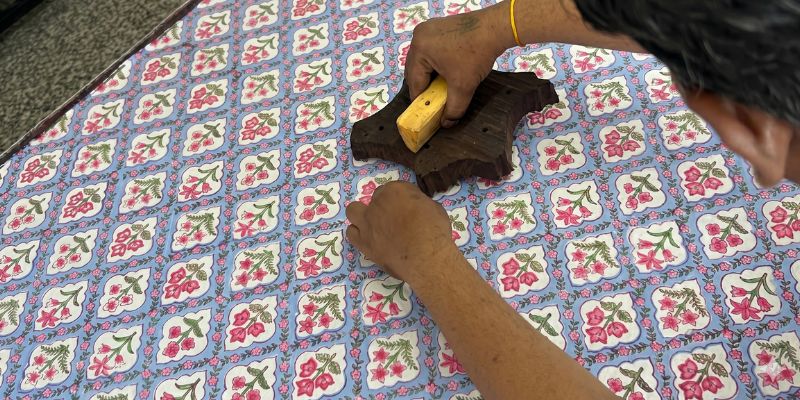
Authentic hand block printed textiles usually contain slight irregularities because every layer is manually stamped by artisans.
Some common signs of genuine handcrafted printing include:
- Slight variations in alignment and motif placement
- Visible impressions on the reverse side of the fabric
- Natural inconsistencies in dye absorption
- Layered textures created by repeated hand printing
- Minor imperfections that reflect manual craftsmanship
Machine-made imitations often appear overly uniform and lack the visual depth, texture, and softness associated with authentic handcrafted textiles.
FAQs
What are traditional Indian textile printing techniques?
Traditional Indian textile printing techniques include Bagru, Ajrakh, Kalamkari, Dabu, and Sanganeri printing. These crafts use methods such as hand block printing, mud resist printing, natural dyeing, and resist-dye techniques that have been practiced for centuries across different regions of India.
What is hand block printing?
Hand block printing is a traditional textile printing process where hand-carved wooden blocks are dipped into dye and manually stamped onto fabric. Each color and pattern layer is applied separately, making the process highly detailed and labor-intensive.
Which Indian state is famous for block printing?
Rajasthan is especially famous for hand block printing traditions such as Bagru, Dabu, and Sanganeri printing. Gujarat is also globally recognized for textile traditions like Ajrakh and Bandhani.
Are hand block prints sustainable?
Yes, many traditional hand block printing techniques are considered sustainable because they involve handcrafted production methods, natural dyes, low-energy processes, and small-scale artisan manufacturing compared to industrial textile production.

Leave a comment
This site is protected by hCaptcha and the hCaptcha Privacy Policy and Terms of Service apply.