
India’s textile heritage reflects thousands of years of craftsmanship, artistry, trade, and cultural storytelling. From intricate handwoven silks to naturally dyed block prints, Indian textile traditions have shaped fashion, interiors, and craft practices across the world for centuries.
Archaeological discoveries from the Indus Valley Civilization suggest that cotton cultivation and textile production existed in India more than 5,000 years ago. Over time, Indian fabrics became globally sought after because of their fine craftsmanship, natural dyeing techniques, and artistic detailing. Historical trade routes carried Indian textiles to regions across Southeast Asia, the Middle East, Africa, and Europe long before industrial textile manufacturing emerged.
Even today, Indian textile arts continue to influence designers, collectors, museums, and conscious consumers worldwide. As global fashion increasingly shifts toward sustainability and slow craftsmanship, traditional Indian textiles are being appreciated not only as fabrics but also as cultural heritage pieces.
Why Indian Textile Arts Are Globally Celebrated
Indian textile arts are admired globally because they combine artistry, utility, sustainability, and centuries of inherited knowledge. Unlike factory-made textiles, handcrafted Indian fabrics reflect human skill, regional identity, and emotional value.
India is home to one of the world’s largest artisan ecosystems, with millions of craftspeople involved in weaving, embroidery, printing, and dyeing traditions. Many of these crafts continue to survive through artisan communities that have preserved techniques across generations despite industrialization and fast fashion.
The growing global demand for sustainable fashion has further increased appreciation for handmade Indian textiles. Consumers today are moving away from disposable fashion and are increasingly looking for products that carry authenticity, craftsmanship, and ethical production values.
Indian textile techniques such as Ajrakh, Ikat, Kalamkari, Bandhani, and hand block printing are now widely used by luxury designers, independent fashion labels, and contemporary home décor brands across international markets.
Traditional Indian Textile Arts That Continue to Shape Modern Fashion & Design
Ajrakh
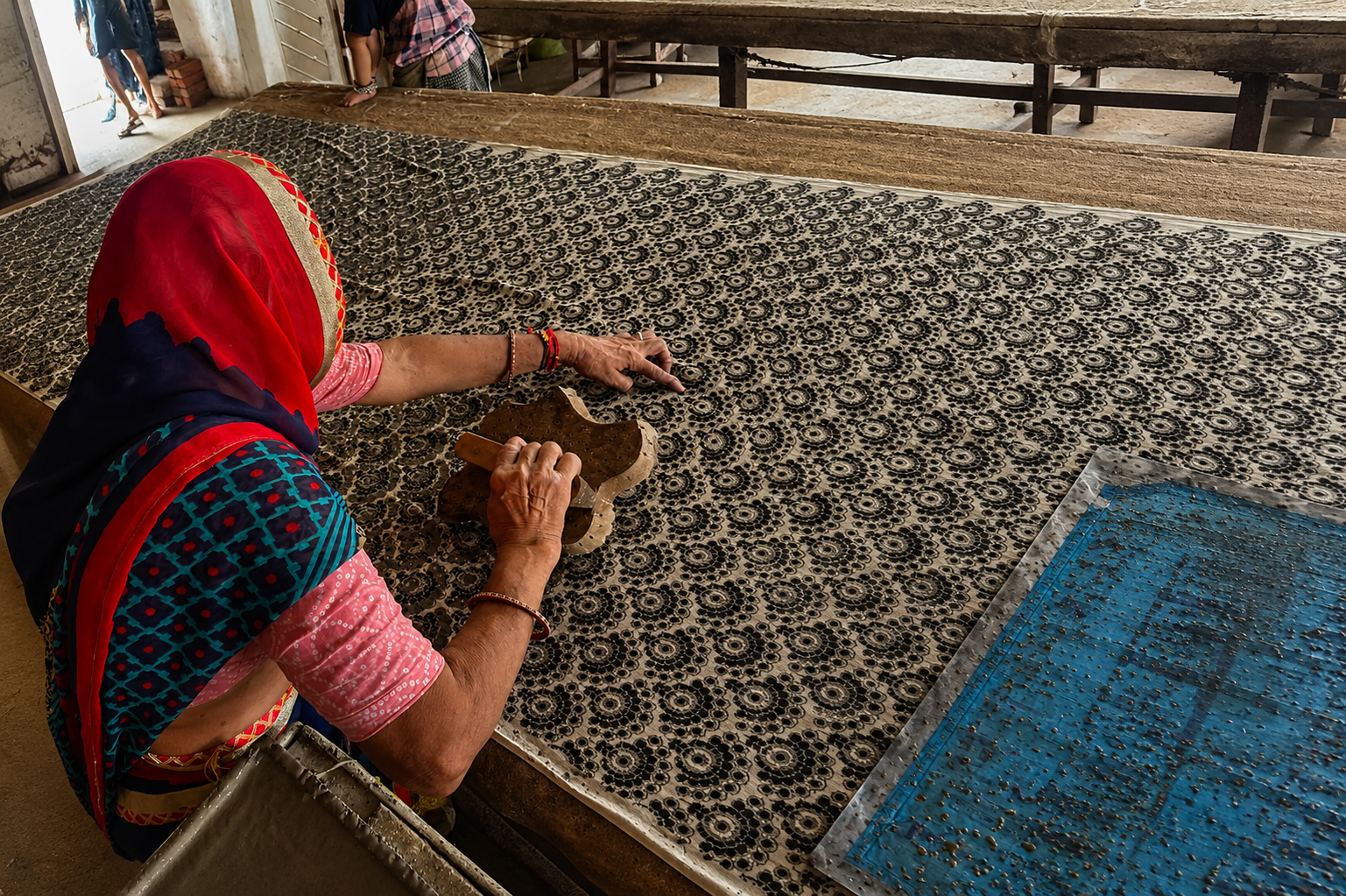
Ajrakh is one of India’s most technically advanced resist-printing traditions practiced mainly in Gujarat and Rajasthan. The process involves multiple stages of hand printing, natural dyeing, washing, and drying that can take several weeks to complete.
Ajrakh textiles are recognized for their deep indigo and madder-red tones along with highly symmetrical geometric patterns inspired by Islamic architecture and natural forms. Traditionally created using natural dyes and resist-printing methods, Ajrakh continues to be admired globally for its precision, complexity, and sustainable craftsmanship.
Bagru
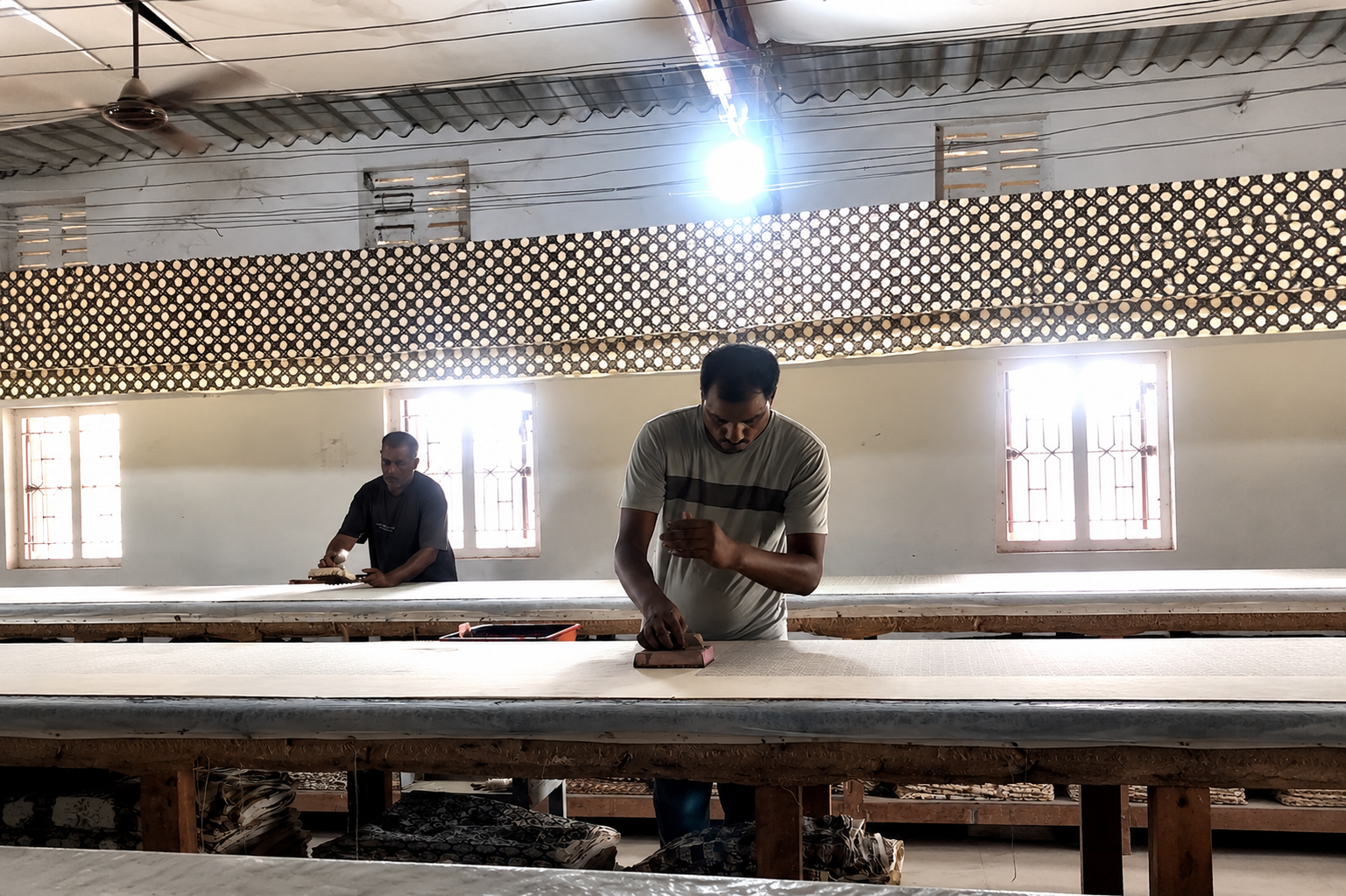
Bagru printing originates from Rajasthan and is known for its earthy aesthetic, natural dyes, and bold hand block printed motifs. Practiced mainly by the Chhipa community near Jaipur, Bagru involves labor-intensive stages including fabric preparation, dye making, block carving, hand printing, and sun drying.
Traditional Bagru prints commonly feature floral vines, butis, stripes, and geometric patterns created using natural dyes such as indigo, iron black, and madder red. The slight irregularities in Bagru textiles are considered marks of authenticity and handcrafted beauty.
Kalamkari
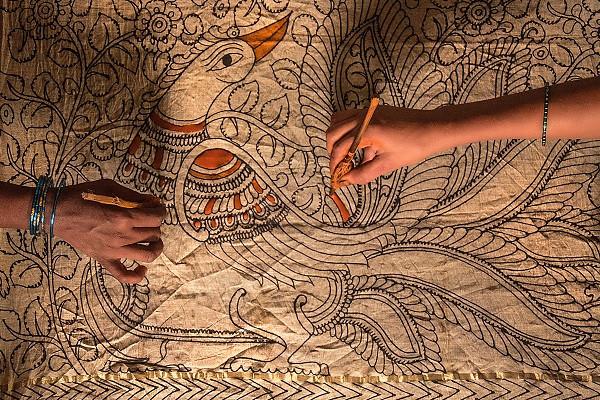
Kalamkari is a narrative textile art tradition from Andhra Pradesh and Telangana that combines storytelling with craftsmanship. The name comes from the Persian words “kalam” meaning pen and “kari” meaning craftsmanship.
Traditional Kalamkari artists use bamboo pens and natural dyes to create mythological scenes, temple art, floral motifs, and nature-inspired compositions. Some forms of Kalamkari also incorporate hand block printing techniques.
What makes Kalamkari unique is its artistic depth and storytelling tradition, where textiles become visual representations of mythology, culture, and heritage.
Ikat
Ikat is a resist-dye weaving technique where yarns are dyed before weaving rather than after fabric construction. This creates visually blurred yet highly sophisticated patterns that require extraordinary planning and precision.
India has multiple Ikat traditions including Pochampally Ikat from Telangana, Patola from Gujarat, and Odisha Ikat. These textiles are admired for their technical complexity, geometric beauty, and handcrafted uniqueness.
Bandhani
Bandhani is a traditional tie-dye textile art from Rajasthan and Gujarat. The craft involves tying thousands of tiny knots across the fabric before dyeing it, creating intricate dotted patterns once opened.
Bandhani textiles are especially associated with celebrations, weddings, and festive dressing because of their vibrant colors and decorative appeal. The technique requires immense patience and skilled handwork.
Chanderi
Chanderi fabrics from Madhya Pradesh are known for their lightweight texture, soft sheen, and elegant transparency. Traditionally woven using silk and cotton blends, Chanderi textiles became popular under royal patronage because of their luxurious yet delicate appearance.
Today, Chanderi remains widely used in occasion wear, sarees, dupattas, and contemporary designer collections.
Maheshwari
Maheshwari textiles originated in Madhya Pradesh and are known for elegant striped borders, reversible designs, and lightweight weaving techniques. These fabrics were historically promoted under the patronage of Queen Ahilyabai Holkar.
Maheshwari weaves balance simplicity with sophistication, making them highly versatile for both traditional and contemporary fashion.
Kantha
Kantha is a traditional embroidery craft from West Bengal where layers of fabric are stitched together using running stitches to create textured handmade textiles.
Originally developed as a form of textile recycling within households, Kantha evolved into an internationally admired embroidery tradition known for its artistic motifs, storytelling patterns, and handcrafted character.
Pochampally
Pochampally is a famous Ikat weaving tradition from Telangana recognized for bold geometric layouts and vibrant color combinations. The technique involves resist-dyeing yarns before weaving, requiring precise mathematical planning to align patterns correctly.
Pochampally textiles have received global recognition for their craftsmanship and are widely used in fashion and interiors.
Patola
Patola is considered one of India’s most luxurious and technically demanding textile traditions. Practiced in Gujarat, Patola uses a double Ikat weaving technique where both warp and weft yarns are resist-dyed before weaving.
Creating a single Patola textile can take several months because of the precision involved. Historically associated with royalty and aristocracy, Patola remains a symbol of heritage luxury and artisan mastery.
Additional Textile Traditions Worth Recognizing
India’s textile heritage extends far beyond these crafts. Other important traditions include:
- Banarasi weaving from Varanasi
- Jamdani weaving from Bengal
- Phulkari embroidery from Punjab
- Kota Doria weaving from Rajasthan
- Toda embroidery from Tamil Nadu
- Sujani embroidery from Bihar
Each of these crafts reflects regional identity, artisan knowledge, and centuries of cultural continuity.
The Role of Artisans in Preserving Textile Heritage
Artisans remain the foundation of India’s textile ecosystem. These crafts continue to survive because of communities that have preserved techniques across generations despite changing consumer behavior and industrial competition.
Many traditional crafts are still practiced in small villages and family workshops where skills are taught through observation and hands-on learning rather than formal institutions.
Supporting artisan-led textiles today is not only about fashion or décor—it is also about preserving cultural heritage, sustaining rural livelihoods, and protecting handmade traditions that are at risk of disappearing.
Why Slow Fashion is Returning to Traditional Textiles
The fashion industry is increasingly shifting toward sustainability, ethical sourcing, and conscious consumption. Consumers are now questioning the environmental and social impact of fast fashion and are seeking products that are made responsibly.
Traditional Indian textiles naturally align with the principles of slow fashion because they emphasize craftsmanship, durability, natural materials, and thoughtful production processes.
Many contemporary designers and brands are collaborating directly with artisan communities to integrate heritage crafts into modern silhouettes, home décor collections, and global fashion markets.
This renewed appreciation for handmade textiles is helping traditional Indian crafts remain relevant in today’s design landscape while creating sustainable opportunities for artisan communities.
FAQs
What are the most famous Indian textile crafts?
Some of the most celebrated Indian textile traditions include Ajrakh, Bagru, Bandhani, Kalamkari, Ikat, Patola, Chanderi, Kantha, and Banarasi weaving. These crafts are admired globally for their craftsmanship, cultural significance, and handmade detailing.
Which Indian textile tradition is among the oldest?
Handloom weaving and hand block printing are considered among the oldest textile traditions in India, with evidence dating back thousands of years to the Indus Valley Civilization.
Why are handmade textiles expensive?
Handmade textiles require significant time, artisan skill, manual craftsmanship, and detailed production processes. Unlike machine-made fabrics, handcrafted textiles are often produced in smaller quantities using traditional techniques and natural materials, making them more valuable and unique.
Why are Indian handcrafted textiles gaining popularity globally?
Indian handcrafted textiles are gaining international popularity because consumers are increasingly valuing sustainability, ethical production, craftsmanship, and cultural authenticity. Handmade fabrics also offer individuality and artistic depth that machine-made products cannot replicate.

Leave a comment
This site is protected by hCaptcha and the hCaptcha Privacy Policy and Terms of Service apply.