
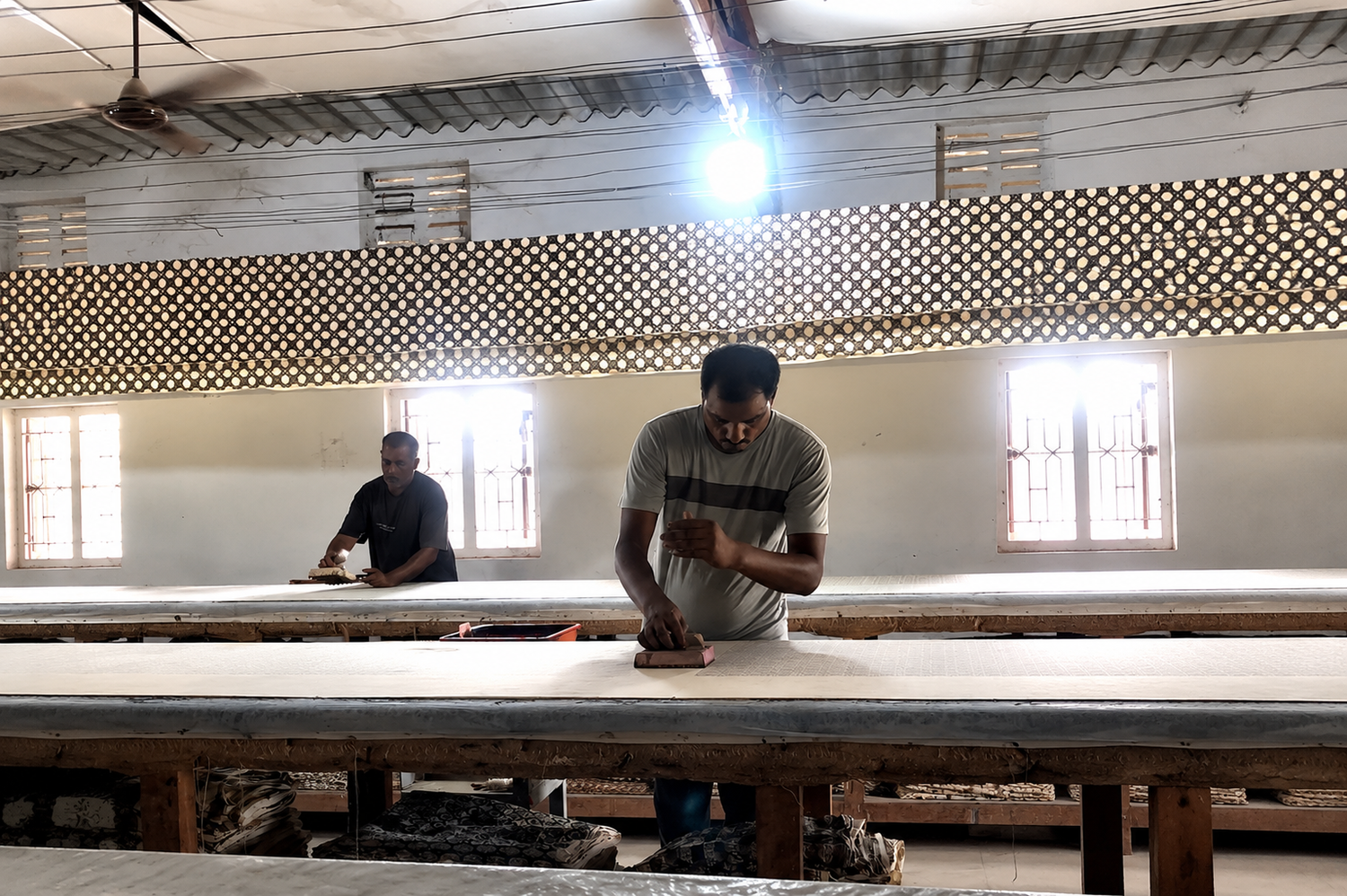
Tussar silk is one of India’s most fascinating textile traditions, admired not for polished perfection but for its raw beauty, texture, and organic character. Unlike mulberry silk, which is cultivated in controlled environments, tussar silk comes from wild silkworms that live within forest ecosystems and feed on trees such as arjun, sal, and asan.
This natural origin gives tussar silk its distinctive golden-beige tone, visible slubs, textured surface, and earthy elegance that immediately separates it from conventional silk varieties. Over centuries, tussar silk has remained deeply connected to India’s tribal communities, forest economies, and artisan weaving traditions.
Historically, tussar silk has been woven and traded across eastern and central India for generations. Today, as global fashion increasingly shifts toward sustainability, slow craftsmanship, and natural textiles, tussar silk is gaining renewed relevance among designers, textile artists, and conscious consumers.
Its ability to interact beautifully with natural dyes, hand block printing, batik painting, embroidery, and artisanal textile techniques makes tussar silk one of the most versatile handcrafted luxury fabrics in India today.
What Is Tussar Silk?

Tussar silk, also spelled tasar, tussah, or kosa silk, is a wild silk produced mainly by the silkworm species Antheraea mylitta. Unlike domesticated silkworms used for mulberry silk production, tussar silkworms thrive naturally in forest environments.
This wild ecosystem directly influences the fibre structure itself. Tussar silk usually has:
- Visible slubs
- Uneven yarn texture
- A matte sheen
- A naturally warm undertone
- Slightly shorter fibres
Instead of the highly polished finish associated with conventional silk, tussar carries a grounded and artisanal quality that many designers now actively seek.
Because the fibre develops naturally rather than under industrial control, every tussar fabric contains subtle irregularities that enhance its handcrafted appeal.
Tussar Silk vs Mulberry Silk — Understanding the Difference

Although both are pure silk, tussar silk and mulberry silk differ significantly in texture, appearance, dye behaviour, and overall character. These differences come mainly from the environment in which the silkworms are raised and how the fibres develop naturally.
| Feature | Tussar Silk | Mulberry Silk |
|---|---|---|
| Source | Produced by wild silkworms living in forest ecosystems | Produced by domesticated silkworms raised in controlled environments |
| Base Colour | Natural golden-beige tone | Usually soft white or ivory |
| Texture | Textured with visible slubs and irregularities | Smooth, fine, and uniform |
| Surface Finish | Matte or soft sheen | Bright glossy shine |
| Dye Absorption | Creates layered, earthy, and tonal colour variations | Produces brighter, sharper, and more saturated colours |
| Feel | Slightly crisp and organic | Soft, fluid, and smooth |
| Appearance | Rustic, artisanal, handcrafted | Polished and luxurious |
| Best Used For | Handcrafted textiles, block printing, batik, artisanal fashion | Luxury sarees, smooth drapes, occasion wear |
| Colour Behaviour | Indigo appears moodier, madder turns rust-like, yellows become muted | Colours appear cleaner, brighter, and more vibrant |
| Visual Character | Natural depth and texture | Uniform and refined finish |
Because of its uneven fibre structure and naturally warm undertone, tussar silk creates softer and more dimensional colour outcomes. This organic interaction with dye is one of the reasons artisans and textile designers value tussar silk for handcrafted textile processes such as hand block printing, batik, and natural dyeing.
The Regions and Communities Behind Tussar Silk
Jharkhand remains the largest producer of tussar silk in India and contributes nearly 70 percent of the country’s production. Other important tussar-producing regions include:
- Bihar
- Odisha
- Chhattisgarh
- West Bengal

The craft is deeply connected to tribal and rural communities involved in cocoon cultivation, forest gathering, spinning, dyeing, and weaving.
Bhagalpur in Bihar is especially famous for tussar weaving and is often referred to as the “Silk City of India.” Odisha is known for combining tussar silk with ikat weaving traditions, while West Bengal produces softer and finer tussar variations.
This close connection between forests, artisan communities, and textile production gives tussar silk cultural importance far beyond fashion. It supports traditional livelihoods while preserving generations of inherited textile knowledge.
Why Tussar Silk Holds Colour Differently

One of the most distinctive qualities of tussar silk is the way it responds to colour and dye absorption.
Unlike cotton or mulberry silk, tussar does not absorb dye evenly because of its slubbed texture, protein composition, and natural fibre irregularities.
The Science Behind Tussar’s Dye Absorption
Tussar silk has a naturally uneven fibre texture, which affects how dyes settle into the fabric surface.
Instead of creating completely flat and uniform colour, tussar silk develops:
- Tonal movement
- Layered colour depth
- Natural variation
- Soft painterly transitions
The slubbed texture absorbs dye differently across the fabric, creating depth and richness that feels organic and handcrafted.
Its warm golden undertone also changes how colours appear after dyeing.
For example:
- Indigo shifts toward teal and olive tones
- Madder root develops rust and terracotta shades
- Pomegranate rind creates muted yellows
- Iron mordants deepen into smoky greys and blacks
This unique interaction between dye and fibre is one of the reasons artisans and textile designers love working with tussar silk for handcrafted textile techniques.
Why Tussar Works Beautifully with Handcrafted Textile Techniques
Tussar silk responds exceptionally well to artisan-led textile methods because its texture enhances the visual depth of handcrafted work.
The fabric is especially suited for:
- Hand block printing
- Batik painting
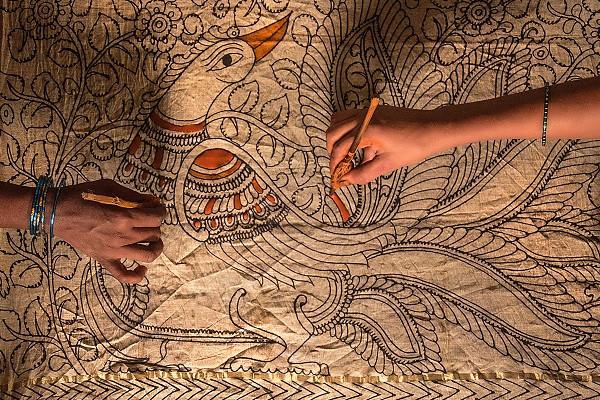
- Kalamkari
- Natural dyeing
- Hand embroidery
- Resist dyeing techniques
Unlike flat industrial fabrics, tussar silk creates layered surfaces where prints and brushwork appear more artistic, dimensional, and organic.
At THREAD COUNTS, tussar silk is often explored as a base for handcrafted textile experimentation because of the way it elevates both dye behaviour and artisanal surface detailing.
Texture, Drape, and Wearability of Tussar Silk
Tussar silk has a structured yet breathable drape that balances elegance with comfort.
The fabric holds shape beautifully, making it especially suitable for:
- Sarees
- Jackets
- Kaftans
- Dresses
- Co-ord sets
- Stoles
- Contemporary separates
Unlike highly polished silk, tussar feels quieter and more grounded. Its matte sheen and textured surface create understated luxury rather than excessive shine.
This makes tussar silk particularly appealing in modern slow-fashion wardrobes where consumers increasingly value texture, craftsmanship, and natural materials.
How to Identify Authentic Tussar Silk
Authentic tussar silk usually contains:
- Visible slubs
- Uneven texture
- A natural beige or golden undertone
- Matte rather than glossy sheen
- Slight firmness in hand feel
The fabric may also be labelled as:
- Tussar silk
- Tasar silk
- Kosa silk
- Vanya silk
A traditional burn test can also help identify genuine silk. Real silk smells similar to burnt hair and leaves black ash instead of melting like synthetic fibres.
Caring for Tussar Silk
Because tussar silk is a natural protein fibre, it requires gentle handling.
For best care:
- Dry cleaning is recommended
- If hand washing, use cold water and mild detergent
- Avoid wringing or twisting
- Dry flat away from direct sunlight
- Iron on low heat using a cloth barrier
- Store in breathable muslin fabric
Proper care helps preserve the texture, colour richness, and handcrafted character of tussar silk over time.
Why Tussar Silk Belongs in a Conscious Wardrobe
Tussar silk naturally aligns with slow fashion and sustainable textile practices because it supports artisan communities, forest ecosystems, and small-scale textile production.
Unlike heavily industrial fabrics, tussar silk undergoes fewer chemical and mechanical interventions during processing.
Its handcrafted aesthetic also encourages consumers to appreciate textiles as long-lasting cultural objects rather than disposable fashion products.
As awareness around conscious consumption continues to grow globally, tussar silk remains one of India’s most important heritage textiles — balancing luxury, sustainability, and artisanal depth.
Frequently Asked Questions About Tussar Silk
What is tussar silk made from?
Tussar silk is made from wild silkworm cocoons found mainly in forest ecosystems across eastern and central India.
Is tussar silk the same as mulberry silk?
No. Tussar silk is more textured, matte, and naturally golden, while mulberry silk is smoother, shinier, and finer.
Why does colour look different on tussar silk?
Its natural undertone, slubbed texture, and uneven fibre structure create layered and softer colour absorption compared to smoother fabrics.
Is tussar silk sustainable?
Yes. Tussar silk supports forest ecosystems, artisan livelihoods, and slow handcrafted production methods.
Which Indian states are famous for tussar silk?
Jharkhand, Bihar, Odisha, Chhattisgarh, and West Bengal are among the most important tussar-producing regions in India.
Why do designers prefer tussar silk for handcrafted textiles?
Designers value tussar silk because its textured surface adds depth, richness, and artistic character to natural dyeing, hand printing, and embroidery techniques.

Leave a comment
This site is protected by hCaptcha and the hCaptcha Privacy Policy and Terms of Service apply.